There are some people at Apple who become synonymous with the products they introduce.
Steve Jobs was one of them.
Jony Ive was another.
And then there was Phil Schiller — the man who could walk onto an Apple stage, straighten his shoulders, flash that unmistakable grin and somehow make “and now, something really great” feel like the most exciting sentence in technology.
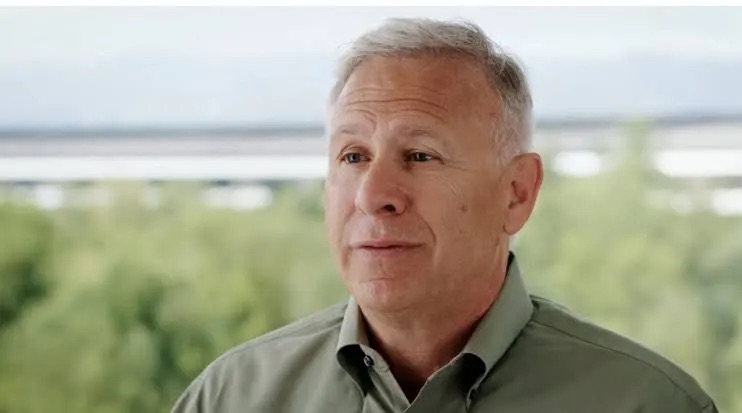
Today, as Apple enters its next chapter under John Ternus, Schiller is stepping back from some of his biggest remaining responsibilities, including oversight of the App Store and Apple’s product events.
He isn’t disappearing entirely however: Schiller remains an Apple Fellow and is expected to continue working on projects inside the company. (The Verge)
But it still feels like the end of something.
Because for an entire generation of Apple fans, Phil Schiller wasn’t simply an executive.
He was part of the show.
The other man on the stage
For anyone who grew up watching Apple keynotes, Schiller occupied a fascinating position.
He wasn’t Steve Jobs — and he never pretended to be.
That distinction mattered.
Jobs had the reality-distortion field, the black turtleneck, the pauses, the dramatic reveal and the ability to make a new piece of glass and aluminium sound like humanity’s greatest achievement.
Schiller had something different.
He was enthusiastic, occasionally cheeky, technically knowledgeable and, perhaps most importantly, seemed genuinely delighted to be there.
He could talk about a MacBook Pro without making it sound like a quarterly earnings call.
And when Apple needed somebody to step into the enormous shadow left by Jobs, Schiller was one of the people who could do it without trying to become him.
Perhaps the most famous example came in January 2009.
Steve Jobs was taking a leave of absence for health reasons, and Phil Schiller took the stage at Macworld for Apple’s final appearance at the event.
It was an extraordinary moment.
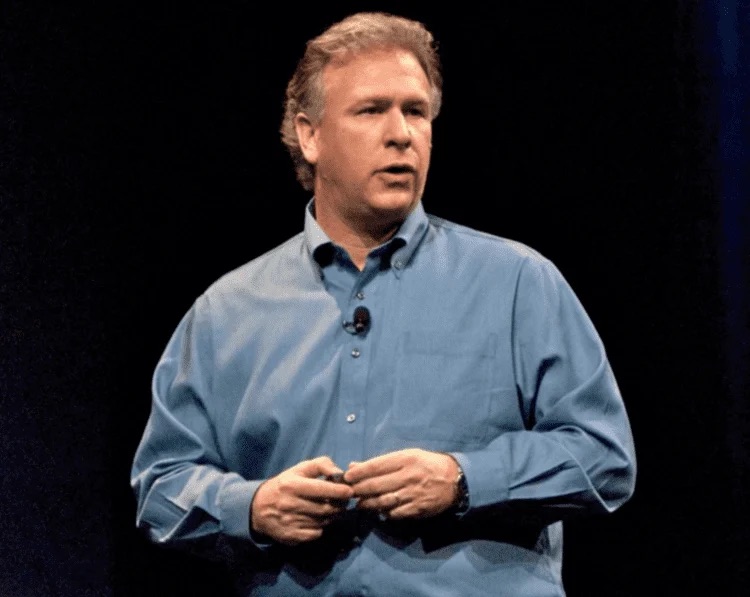
The audience knew what was missing.
Schiller knew what was missing.
And yet he walked out and got on with the job.
The keynote even included a very Jobs-like surprise: Schiller announced a “one last thing” before revealing major changes coming to the iTunes Store, including variable song pricing and DRM-free music. (TechCrunch)
It wasn’t Steve Jobs.
It didn’t need to be.
It was Phil Schiller doing Phil Schiller.
“One more thing” — but make it Schiller
There was always something wonderfully human about watching Schiller on stage.
He had the polished Apple presentation down to a science, but he never quite had Jobs’ theatrical seriousness.
And that was part of the charm.
Schiller could get excited.
He could laugh.
He could make a little joke.
He could occasionally look like the person in the room who was having just as much fun with the announcement as the audience.
That was particularly noticeable during the golden years of the iPod, iPhone and Mac.
These were the days when an Apple event could feel like a genuine occasion.
The lights would go down.
The music would start.
The Apple logo would appear.
Everyone would wait.
And then someone would walk onto that stage and say something along the lines of:
“Good morning.”
And suddenly millions of people around the world were watching.
Schiller became one of the faces associated with that ritual.
Sometimes he was introducing a Mac.
Sometimes an iPhone.
Sometimes an iPad.
Sometimes he was explaining why Apple’s latest product was, naturally, incredible.
And sometimes he was there simply because Steve wasn’t.
The latter was perhaps his most important role.
The Macworld moment
If there is one Schiller keynote that deserves to be remembered, it is that 2009 Macworld presentation.
There was a strange poignancy to it.
It was Apple’s final Macworld keynote, Steve Jobs wasn’t there, and the company’s relationship with the event was coming to an end.
Yet Schiller didn’t turn it into a funeral.
He kept the show moving.
There were new Macs, iLife, iWork, iTunes developments and, eventually, the 17-inch unibody MacBook Pro.
And then there was Tony Bennett.
Yes.
Tony Bennett.
Schiller closed the keynote with music, fittingly introducing Bennett before the singer performed “The Best Is Yet to Come” and “I Left My Heart in San Francisco.” Contemporary coverage noted just how fitting that ending felt for Apple’s final Macworld appearance. (macprices.net)
Looking back now, the symbolism is almost too perfect.
Apple was leaving Macworld.
Steve Jobs was absent.
The old Apple was changing.
And Phil Schiller was standing there, smiling, telling everyone that the show was over.
Except, of course, Apple wasn’t going anywhere.
Neither was Schiller.
The man behind the App Store
Schiller’s legacy isn’t just about keynotes.
Far from it.
He joined Apple in 1987, later returned to the company in the late 1990s and became its senior vice president of Worldwide Marketing. Over the years, he played a significant role in the marketing and development of products across the Mac, iPod, iPhone and iPad eras. (mezha.ua)
He was also deeply associated with the App Store.
When the App Store arrived in 2008, it changed the iPhone from an impressive mobile computer into something much bigger: a platform that could continually evolve through software.
Schiller was there at the beginning alongside Steve Jobs.
Years later, he took over responsibility for the App Store, becoming one of the people responsible for navigating an increasingly enormous and complicated ecosystem of developers, customers, businesses and regulators.
By the time he stepped back from that responsibility, the App Store had become one of the most important parts of Apple’s entire business.
That’s quite a journey from standing on a stage explaining why the new MacBook Pro was really, really good.
A different kind of Apple personality
The reason Schiller’s departure feels significant is because he represents something Apple doesn’t always get enough credit for.
The company has had enormous personalities.
Jobs.
Ive.
Cook.
Federighi.
Forstall.
Cue.
But Schiller was one of the constants.
He was there through the transition from the colourful, slightly chaotic Apple of the early 2000s into the incredibly polished company we know today.
He saw the iPod become a phenomenon.
He saw the iPhone change everything.
He watched the iPad arrive.
He helped sell Macs through Apple’s most important transformation in decades.
He watched Apple go from a company fighting to regain its place in the world to one of the most valuable companies ever created.
And through all of it, he kept showing up.
Sometimes in a black shirt.
Sometimes in a jacket.
Always looking remarkably pleased to be talking about whatever Apple had just built.
The end of an era?
Perhaps.
But not quite the end.
Schiller isn’t walking away completely. His continued position as an Apple Fellow means that his knowledge, experience and institutional memory remain inside the company.
And that’s probably exactly where they belong.
Because if there is one thing Apple has learned over the decades, it’s that its history matters.
Schiller is part of that history.
He is part of the bridge between the Steve Jobs era and everything that came afterwards.
He was there when Apple was still finding its feet.
He was there when the company rediscovered its confidence.
He was there when the world started queuing outside Apple Stores for a phone.
And he was there when those launches became global cultural events.
So, thank you, Phil
There will be plenty written about Phil Schiller’s business achievements.
There should be.
The App Store.
The marketing campaigns.
The products.
The decades at Apple.
All of it matters.
But for those of us who watched Apple from the outside, there is another legacy.
It’s the little moments.
The grin.
The excitement.
The perfectly timed pause.
The slightly awkward joke.
The reassuring “this is really cool” energy.
The moments when he looked like he couldn’t quite believe he got to stand on that stage and show the world what Apple had been working on.
And perhaps that is what made Phil Schiller so good at being Phil Schiller.
He never needed to be Steve Jobs.
He just needed to be the guy who could walk out after Steve, pick up the clicker, take a deep breath and say:
“Okay. Here’s what’s new.”
And for Apple fans, that was usually enough.
So here’s to Phil.
To the keynotes.
To the MacBooks.
To the iPhones.
To the App Store.
To Tony Bennett at the end of Macworld.
To “one last thing.”
And to all those wonderfully over-produced, ridiculously exciting Apple moments that somehow made us all care about computers, and little rectangles of glass.
The stage may be getting a little quieter.
But Phil Schiller has already earned his place in the history of Apple.
And, thankfully, he isn’t quite leaving the building just yet.
Leave a Reply