Apple has filed enough patents over the years to cover practically every idea imaginable.
Some become products. Some become features.
And some disappear into the enormous Apple filing cabinet, never to be seen again.
But every now and then, one catches your eye and makes you think: hang on, Apple might actually be onto something here.
A recent(‘ish) patent application highlighted by AppleInsider is just one of those.
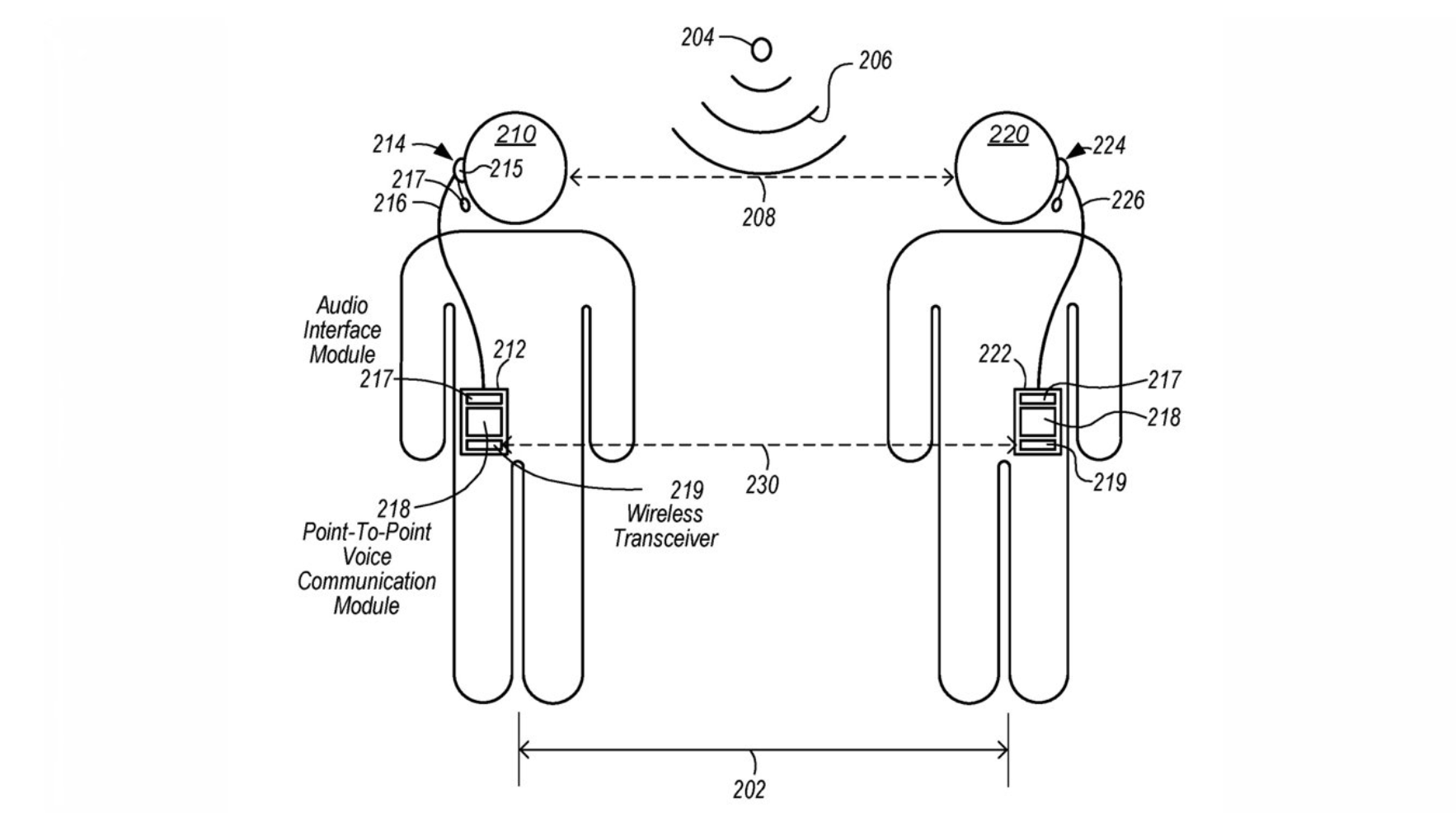
The idea revolves around nearby iPhones being able to communicate with one another using short-range wireless technology such as UWB and Bluetooth.
As David Schloss notes:
Apple’s Ultra Wide Band (UWB) technology already allows the iPhone and Apple Watch to detect the location of a person or object. UWB works a bit like echolocation, sending out radio waves and measuring the return signals.
The UWB chip is what gives iOS and watchOS the ability to get compass like directions to devices like the AirTag and get a live update of the distance.
On its own, that doesn’t sound particularly revolutionary.
But think about what Apple could potentially do with it.
Your iPhone could know who’s around you
Bluetooth has been quietly sitting inside the iPhone for years, doing everything from connecting AirPods to helping with AirDrop and Apple’s wider ecosystem.
But imagine taking that basic idea and making iPhones much more aware of the other iPhones around them.
You walk into a room.
There are five iPhones nearby.
Your iPhone knows they’re there.
They can potentially communicate.
And suddenly you’ve got a tiny, local network of Apple devices without needing to involve a traditional cellular connection or Wi-Fi network.
That’s where things get interesting.
Apple already has the ingredients
This isn’t quite as crazy as it sounds.
Apple already uses nearby Apple devices in some pretty clever ways.
The Find My network, for example, relies on nearby Apple devices detecting Bluetooth signals from lost items and securely helping relay their location. (Cult of Mac)
Apple has also been experimenting with proximity-based communication for years. Earlier Apple patents have described devices communicating when they’re close together using Bluetooth, NFC and other wireless technologies. (NFCW)
So the underlying technology isn’t exactly science fiction.
The interesting part is what Apple might want to do with it next.
Imagine an iPhone-to-iPhone network
Here’s where I’m going to get slightly carried away.
Imagine you’re at a concert.
There’s no signal.
The Wi-Fi is overloaded.
But there are thousands of iPhones around you.
Your iPhone could potentially communicate with nearby devices and pass information from one phone to another.

Think of it as a miniature Apple-made mesh network.
Your phone talks to the phone next to you.
That phone talks to another.
And so on.
Suddenly information could potentially travel across a crowd without every device having to connect directly to the internet.
That’s a very interesting possibility.
And it could have some genuinely useful applications.
Emergency communication could be huge
This is probably the most obvious use case.
Imagine being somewhere where cellular service has disappeared following a natural disaster.
Or you’re hiking somewhere with no coverage.
Or you’re in a packed stadium where the network has collapsed under the weight of thousands of people trying to use it simultaneously.
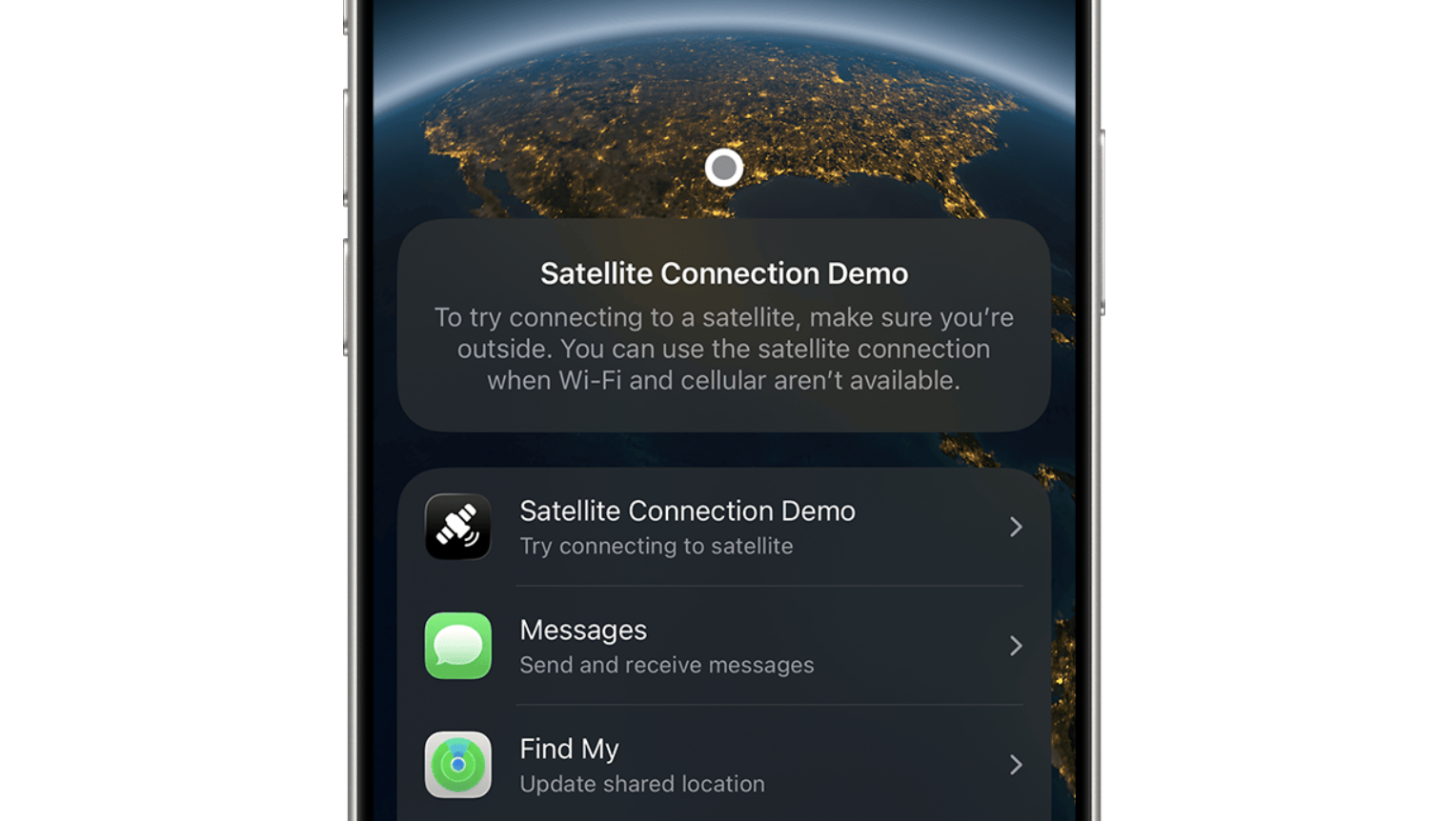
If nearby iPhones could communicate directly, Apple could potentially create a form of local emergency messaging.
Your iPhone doesn’t necessarily need to reach a cell tower.
It just needs to reach another iPhone.
And that iPhone might be able to reach another one.
Apple wouldn’t even necessarily need to market this as a “mesh network”.
It could simply become another invisible piece of iPhone magic.
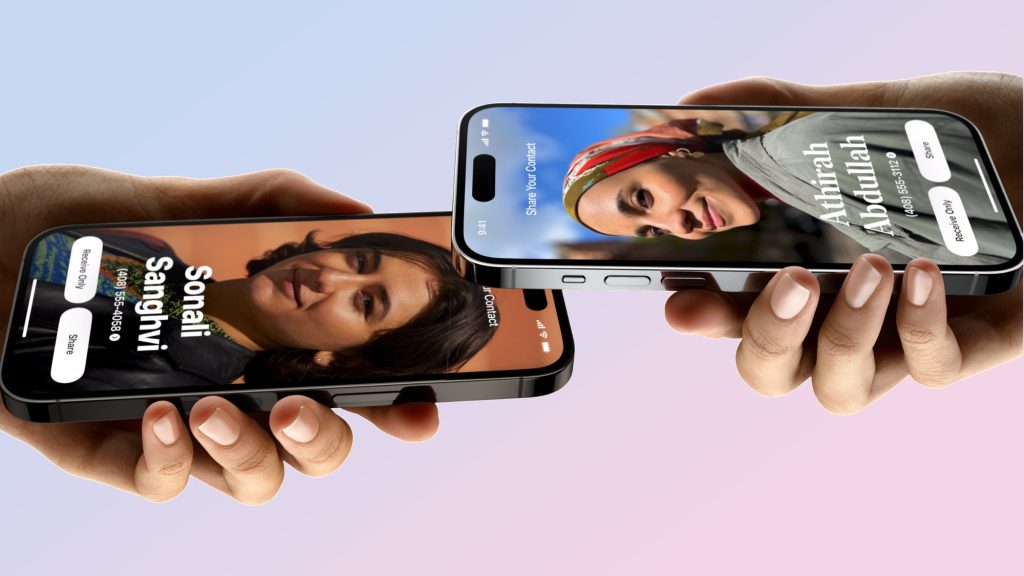
And then there’s AirDrop…
Now let’s get more interesting.
What if this technology eventually makes AirDrop feel almost instantaneous?
You walk up to somebody.
Your iPhone recognises their iPhone.
You share a photo.
Done.
No hunting around for devices.
No awkwardly asking someone to turn AirDrop on.
No “Why can’t I see your iPhone?”
Just two Apple devices recognising that they’re sitting next to each other and figuring it out.
Apple already uses proximity technologies to make device interactions feel almost magical.
This could take that idea much further.
What about people in the same room?
Here’s another possibility.
Your iPhone could potentially understand that you’re physically near a group of people who are also using Apple devices.
That could open the door to some rather interesting social features.

Imagine starting a multiplayer game without pairing anything.
Or sharing a playlist with everyone around you.
Or creating a temporary group chat between nearby devices.
Or arriving at a meeting and having your iPhone automatically recognise the other participants.
Or walking into a cinema and having your phone automatically switch into a special mode.
The possibilities get increasingly weird the more you think about them.
And here’s my favourite theory…
What if this eventually becomes part of Apple’s spatial computing strategy?
Apple is already building an ecosystem around devices understanding their surroundings.
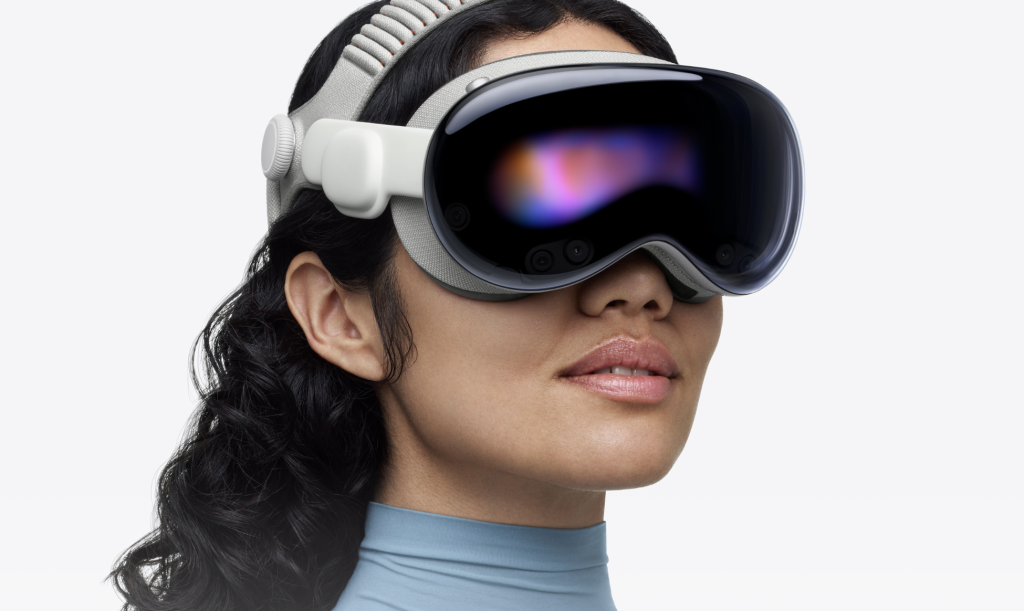
Vision Pro knows where things are around you.
AirPods are reportedly being explored with cameras and more sophisticated environmental awareness.
The iPhone has increasingly sophisticated positioning and sensing capabilities.
Now imagine all of those devices talking to each other — and potentially talking to the Apple devices around you.
Your iPhone could know where your AirPods are.
Your AirPods could know what you’re looking at.
Your Vision Pro could know where your iPhone is.
And nearby iPhones could potentially communicate with one another.
Suddenly Apple isn’t just making individual products.
It’s building a digital layer that understands the physical world around you.
That’s the really exciting possibility.
The slightly-crazy future
Imagine walking into a room full of Apple devices.
Your iPhone knows who’s nearby.
Your AirPods know where you’re looking.
Your Apple Watch knows you’re moving.
Your Vision Pro knows the room.
And all of these devices quietly exchange information in the background.
No pairing screens.
No complicated setup.
No “connect to network”.
It just works.
That sounds like classic Apple.
The company has always been particularly good at taking complicated technology and hiding the complicated bit from the user.
Bluetooth communication between nearby iPhones could be another example of exactly that.
But let’s not get carried away …
It’s worth remembering the golden rule of Apple patents …
A patent does not mean a product is coming.
Apple files patents and patent applications constantly, often covering technologies that never make it into a shipping product.
So we shouldn’t suddenly expect “iPhone Mesh” to appear in the next iOS release.
The more interesting takeaway is that Apple is clearly continuing to explore ways for its devices to understand proximity and communicate intelligently with one another.
And that’s something worth watching.
Because today’s slightly obscure patent has a funny habit of becoming tomorrow’s “how did we ever live without this?” feature.
For now, I’ll happily file this one under:
“Probably nothing… but imagine if it actually just worked.”
Leave a Reply