There is something strangely nostalgic about today.
For the first time in 15 years, Apple has a new CEO.
Tim Cook has officially stepped down from the role he took over from Steve Jobs in 2011, becoming executive chairman, while John Ternus takes the reins as Apple’s new chief executive. (Apple)
And while the temptation will be to immediately ask whether Ternus can be the next Steve Jobs, I think that’s the wrong question.
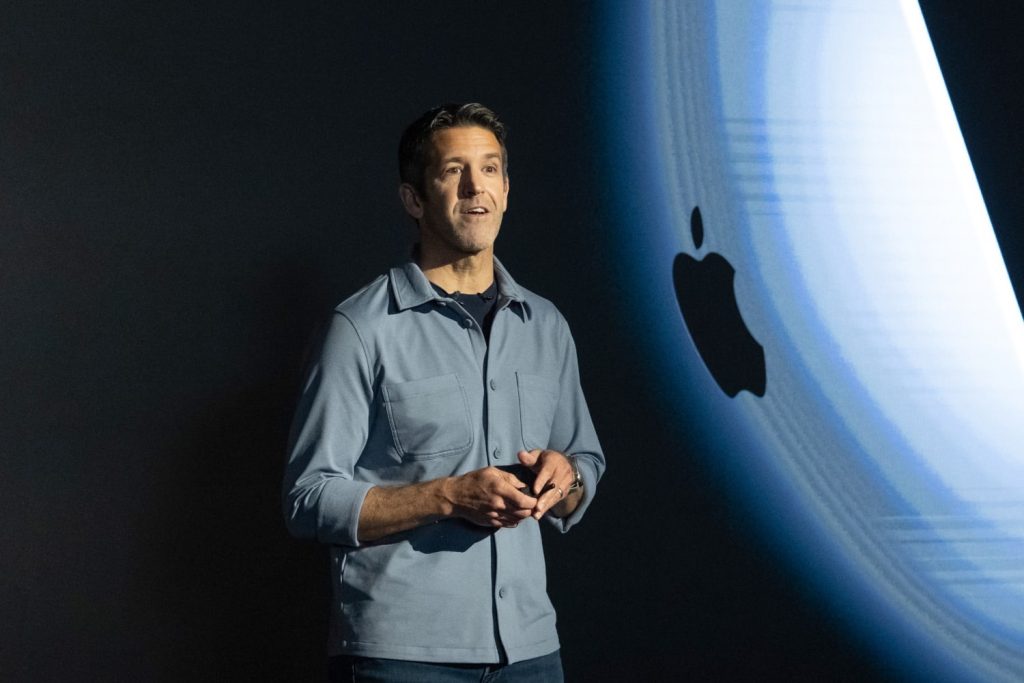
Nobody can be Steve Jobs. And, more importantly, Apple doesn’t need another Steve Jobs.
What Apple needs is someone who understands why Steve Jobs mattered.
That is where John Ternus becomes such an interesting choice.
From the Apple of Jobs to the Apple of today
Ternus joined Apple in 2001.
Think about the timing.
This was the Apple of the original iPod. The colourful iMac G3 was still relatively young. Mac OS X was beginning its transformation of the Mac experience. The iPhone was still years away. The iPad didn’t exist. Apple Stores were only just beginning to appear.
And, most importantly, Steve Jobs had only recently returned to the company he had co-founded.
Ternus wasn’t an outside executive who arrived at Apple decades later and learned about the company’s history from presentations.
He spent his career inside it.
He joined Apple’s Product Design team and eventually rose through Hardware Engineering, becoming one of the people responsible for some of the most important products Apple has produced over the past quarter-century. (Apple Investor Relations)
Today, he has been responsible for hardware engineering across the iPhone, iPad, Mac, Apple Watch, AirPods and Apple Vision Pro, as well as Apple’s transition from Intel processors to Apple silicon. (Apple)
That’s quite a résumé.
But the more interesting part is what it represents.
John Ternus is, in many ways, a living bridge between two Apples.
The Apple of Steve Jobs.
And the Apple of Tim Cook.
Remember when Apple felt like magic?
For those of us who grew up following Apple during the 2000s, there was a period when Apple launches genuinely felt like events.
Not simply product announcements.
Events.
I still remember the feeling around the iPod.
The first time you saw that tiny white device, the click wheel and those impossibly small hard drives, it didn’t feel like Apple was selling you another MP3 player.
It felt like Apple had figured something out.
Then came the iMac.
Then the iPod mini.
Then the iPod nano.
Then the MacBook.
And eventually, on January 9, 2007, Steve Jobs walked onto a stage and said that Apple was going to introduce three products: a widescreen iPod, a revolutionary mobile phone and a breakthrough Internet communicator.
Then he revealed that they were actually one product.
The iPhone.
That was classic Jobs.
The technology mattered, of course. But so did the theatre.
Jobs understood that technology could be emotional.
He could make a processor, a piece of glass or a laptop hinge feel like something worth caring about.
And behind that theatre was an enormous amount of engineering.
That’s the part of Apple’s history that sometimes gets forgotten.
Steve Jobs may have been the person on stage, but Apple was an extraordinary collection of engineers, designers, programmers and hardware teams working obsessively behind the scenes.
John Ternus comes from that world.
The Steve Jobs era wasn’t perfect — and that’s important
There is a tendency to remember the Jobs years through rose-tinted glasses.
And honestly, I understand why.
There was something special about them.
But Apple wasn’t perfect.
MobileMe famously struggled at launch.
Apple Maps had a disastrous beginning.
Products were sometimes delayed.
Mac users waited years for updates.
The company made mistakes.
And Steve Jobs himself could be famously demanding.
But that intensity was also part of what made Apple, Apple.
There is a famous philosophy associated with Jobs: Apple shouldn’t simply ask people what they want and then build it. It should create products that people didn’t necessarily know they wanted yet.
That mentality produced some extraordinary moments.
The iPod wasn’t simply about storing music.
The iPhone wasn’t simply about making phone calls.
The iPad wasn’t simply a bigger iPhone.
The MacBook Air wasn’t simply another laptop.
Apple repeatedly tried to redefine the category.
And that’s why the early years remain so special.
The little details mattered
One of my favourite things about the old Apple era was the obsession with details that most companies would have considered insignificant.
The sound of a Mac starting up.
The way an iPod’s click wheel felt beneath your thumb.
The translucent plastic of an iMac.
The packaging.
The typography.
The little animation when you first switched something on.
Even the way Steve Jobs would hold up a product on stage.
Apple understood that a computer wasn’t just a collection of specifications.
It was an experience.
And this is where I think Ternus has an opportunity.
Because his career has been spent on the physical products themselves. He’s not simply an executive who has been handed Apple as a business.
He understands the things people actually hold.
The man behind the hardware
Apple’s official biography says Ternus leads the hardware engineering teams responsible for products including iPhone, iPad, Mac, Apple Watch, AirPods and Vision Pro. (Apple)
He has also played an important role in Apple’s transition to Apple silicon — arguably one of the most significant changes to the Mac in decades. (Apple Investor Relations)
That transition is particularly important when considering what kind of CEO Ternus could become.
Apple silicon wasn’t simply about making a faster processor.
Apple gained much greater control over the relationship between hardware and software.
That philosophy is deeply Apple.
It’s the same fundamental idea that sat behind the original Mac.
And the iPod.
And the iPhone.
And the Apple Watch.
Apple has always been at its best when the hardware and software feel like one.
Ternus understands that relationship intimately.
And then there’s the Jobs connection
Ternus’s Apple career began during Jobs’s second act.
That is significant.
He joined the company in 2001, just as Apple was rebuilding itself around the products that would ultimately change the technology industry. (Apple Investor Relations)
He therefore spent years inside the organisation that Jobs was reshaping.
He saw the culture.
He saw the obsession with secrecy.
He saw the importance of design.
He saw the engineering process.
And he watched Apple go from the company that many people had written off to one of the most influential companies in history.
But there’s another important point.
Ternus doesn’t appear to be trying to imitate Jobs.
And that’s probably a good thing.
Jobs was Jobs because he was Jobs.
Trying to manufacture another Steve Jobs would be almost guaranteed to fail.
Ternus can instead take the principles that worked and apply them to a completely different era.
From Cook’s Apple to Ternus’s Apple
Tim Cook deserves enormous credit for what happened after Jobs.
When Cook became CEO, some people genuinely wondered whether Apple could survive without its co-founder.
It did more than survive.
Cook built Apple into an enormous global business, expanded its services, strengthened its supply chain and turned the company into something vastly larger financially than it had been when Jobs died. Apple’s market value grew from roughly $350 billion when Cook took over to more than $4.5 trillion by the time he handed over the CEO role. (Reuters)
But Cook’s Apple and Jobs’s Apple were never going to be identical.
Jobs was obsessed with products.
Cook became famous for operations.
Jobs was the showman.
Cook was the operator.
And perhaps that’s exactly why Ternus makes sense now.
He brings Apple back towards the product without throwing away the enormous organisation Cook built.
The engineer in the CEO’s chair
This may ultimately be the most important thing about Ternus.
He’s an engineer.
Not a marketing executive.
Not a finance executive.
Not someone who arrived at Apple after spending their career running other companies.
He’s spent 25 years learning how Apple makes things.
That doesn’t automatically make him a great CEO.
Running Apple is obviously much bigger than designing a fantastic MacBook.
He now has to deal with artificial intelligence, regulation, China, manufacturing, services, shareholders, geopolitics and a company with hundreds of billions of dollars in revenue.
And AI may be the biggest challenge of all.
Apple has been criticised for falling behind competitors in the generative AI race, and Ternus inherits the responsibility of helping Apple establish its position in what could become the defining technology platform of the next decade. (Reuters)
But perhaps having a hardware engineer at the top is exactly what Apple needs when AI threatens to make traditional interfaces feel old-fashioned.
Because the next great Apple product might not simply be another iPhone.
It might be something completely different.
The Apple we fell in love with
For me, the most exciting thing about Ternus becoming CEO isn’t that he might recreate the Apple of 2001.
He shouldn’t.
You can’t recreate that Apple.
The world has changed.
The technology has changed.
Apple has changed.
But there is something wonderful about having someone at the top who was actually there during that transformation.
He joined when Apple was still the company of colourful Macs, iPods and possibilities.
He stayed through the iPhone revolution.
He watched the iPad become a new category.
He helped guide the Mac into the Apple silicon era.
He saw Apple become enormous.
And now he’s responsible for deciding what’s next.
That’s an extraordinary journey.
Maybe Apple doesn’t need another Jobs
Perhaps the biggest mistake we could make is expecting John Ternus to give us another 2007.
We shouldn’t want that.
You can’t watch Steve Jobs unveil the iPhone for the first time again.
You can’t experience the first iPod again.
You can’t go back to the days when Apple keynotes felt like secret meetings where somebody was about to show you something you’d never seen before.
Those moments belong to their time.
But Ternus understands those moments.
He understands the engineering culture that made them possible.
And he understands the modern Apple that Tim Cook built.
That’s a powerful combination.
Apple doesn’t need to become the Apple of 2001 again.
It needs to find the feeling that Apple had in 2001 and bring it into 2026.
That feeling of curiosity.
Of beautiful engineering.
Of making technology feel human.
Of opening a box and genuinely being excited about what’s inside.
Of watching a keynote and thinking, I didn’t know I wanted that until five minutes ago.
If John Ternus can bring even a little of that back — while preserving everything Apple has learned over the last 15 years — then perhaps today isn’t the end of an era after all.
Perhaps it’s the beginning of another one.
And that, more than anything, is why I think John Ternus might be exactly the right person for Apple — right now.
Leave a Reply